Peptide Purity & Yield Enhancing In Spps Purepep Blog
Peptide Laboratory Examination Results A 95% pureness means that out of every 100 "books" in your set, 95 are excellent copies and 5 have some sort of mistake. This guide breaks down what pureness actually indicates in peptide chemistry, exactly how it's determined, what the pollutants are, and just how to check out the documentation that shows a peptide is what it declares to be. If you have actually ever browsed a peptide directory, you've seen pureness numbers anywhere. These numbers obtain thrown around so commonly that it's very easy to play down them-- simply one more specification on a product page. Chameleon Peptides markets research compounds specifically for lab and logical objectives. Finally, recognizing peptide purity levels and qualities helps you make notified choices for your experiments. A peptide's pureness portion informs you how much of that sample is the actual deal versus byproducts, with typical research grades being around 95% as much as 98-99% for additional purity. Analytical HPLC and MS are your pals here-- HPLC measures pureness, and MS verifies identification, with each other ensuring you know what remains in your tube.
Understanding Peptide Purity Testing
Researchers often reference Janoshik testing when reviewing brand-new suppliers or validating claims. COAs from Janoshik consist of QR codes for on-line verification, enabling you to scan and confirm results versus the laboratory's database. This verification attribute substantially increases trust in the paperwork. Janoshik has actually developed itself as a highly regarded name in independent peptide testing, typically referred to as the "gold standard" within the study community.
Laboratory Mistake & Examinations
Desalted peptides work well for ELISA layer, some cell-based assays, and applications where moderate pureness is acceptable.Peptide purity testing remains among one of the most essential devices researchers utilize to assess research compound quality.You can call the detailed research laboratory directly to verify they carried out the testing.The table listed below shows how pureness specifications relate to several typically researched peptide classes.Criterion turn-around is usually 5-7 business days from example receipt.For quantitative receptor binding studies, IC50 resolutions, or any type of study where dose-response precision issues, ≥ 98% purity is strongly liked.
One core technique is High-Performance Fluid Chromatography (HPLC), the gold standard for assessing peptide purity. HPLC divides peptide mixtures and can find also small pollutants listed below 1% of the sample [4] A common lab will run the peptide through an HPLC system and create a chromatogram-- the primary optimal represents the target peptide, and any type of additional tops indicate various other compounds.
Is 95% purity good for peptides?
Peptides with an 85% purity degree or greater are normally made use of in enzyme assays or organic activity researches. Peptides with purity above 95% are superb for quantitative evaluation.
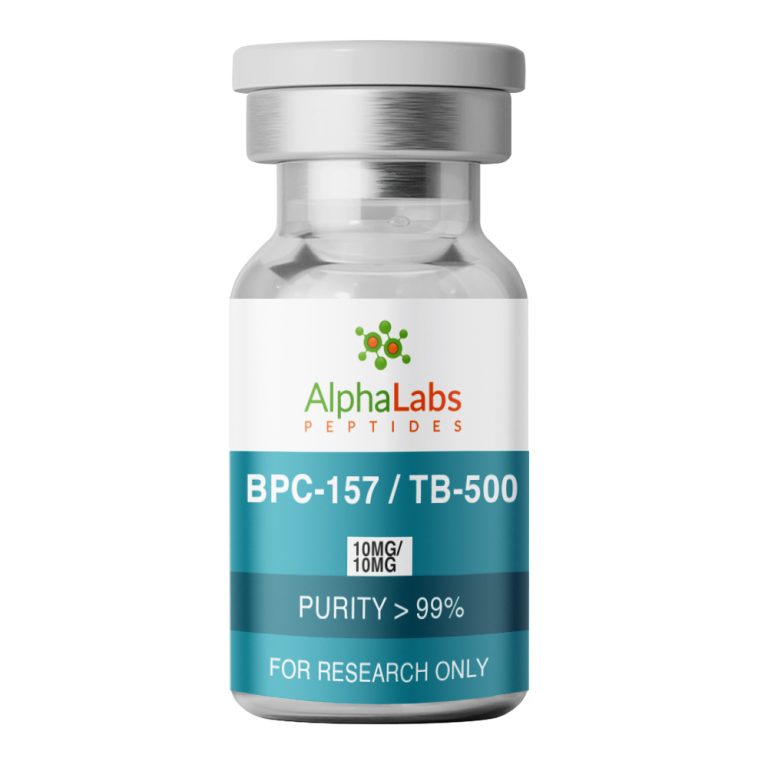
The last purified peptides are vialed under aseptic problems. Solid Stage Peptide Synthesis (SPPS) is based on consecutive enhancement of alpha-amino and side chain safeguarded amino acid residues to an insoluble polymeric assistance. Quickly, synthesis is performed by stepwise enhancement of activated amino acids to the strong assistance (Wang material and PEG-PS) starting from the carboxy terminus to the amino terminus. Activation of amino acids were carried out by DIC-Oxyma chemistry. At the end of the synthesis the peptides were cleaved off the material by reagent R (90% TFA, 5% Thioanisole, 3% Ethanedithiol, and 2% Anisole) and subjected to numerous ether removals. Identity confirmation confirms the details secretagogue being researched. Peptides like BPC-157 and TB-500 utilized for injury recuperation applications must receive full verification. Identification verification is critical since substitution with various substances would essentially alter the study approach. The testing procedure entails details actions to make certain accurate results and correct example handling. For these high-stakes scenarios, the cost of testing is insignificant contrasted to potential effects of utilizing unverified items. For researchers adhering to procedures from resources like the BPC-157 and TB-500 stacking guide, validated product high quality makes certain the procedure gets a reasonable assessment. The peptide market runs greatly without regulatory oversight. Unlike pharmaceutical drugs that go through strenuous testing before reaching customers, study peptides exist in a gray location where high quality depends completely on vendor integrity. Scientists typically examine pureness together with identity confirmation, testing techniques, and overall documents.
Mass Spectrometry
If screening verifies top quality, you've gained self-confidence for future orders. The lab is often stated along with Janoshik and MZ Biolabs as a relied on third-party verification resource. For peptides with modifications (acetylation, amidation), the academic mass must make up these alterations. The peptide storage guide covers correct handling that preserves sterility without needing official screening. Examining uses Inductively Paired Plasma Mass Spectrometry (ICP-MS), which can detect even trace degrees of steels. Heavy steels accumulate in the body in time, possibly causing neurological damage, kidney dysfunction, and various other persistent troubles. For instance, BPC-157 (series GEPPPGKPADDAGLV) has a theoretical monoisotopic mass of 1,419.53 Da. A mass specification verification revealing [M+H] + of 1,420.54 (the protonated molecule) would confirm the correct molecular weight. A disparity of more than 0.5 Da suggests either a series error, an alteration, or a various substance completely. " Mass spectrometry answers "is the discovered substance regular with the intended peptide identity? " With each other they give stronger batch-level evidence than either method alone. HPLC can sustain insurance claims concerning chromatographic purity, impurity peak burden, and degradation patterns when the technique is suitable and the chromatogram is offered. These techniques help identify the peptide's make-up, verify the molecular weight, and find any type of architectural alterations or impurities, making certain the peptide fulfills top quality and spec requirements. MS verifies the correct molecular weight and is highly conscious mass differences representing amino acid replacements, deletions, or modifications. For the confirmation of typical study peptides from developed suppliers, ESI-MS supplying the appropriate molecular weight is website taken into consideration sufficient verification of identity. Peptide pureness is confirmed primarily with reverse-phase HPLC, which separates the target substance from contaminations and evaluates their loved one peak areas. A specified purity of ≥ 98% suggests a minimum of 98% of the UV-absorbing product eluting from the column corresponds to the target peptide. Endotoxin LAL screening and Certification of Analysis review finish the confirmation BPC-157 picture for research-grade product.